

Safety, Occupational Health, and Working Environment
(Disclosure 403-1, 403-2, 403-7, 403-8, 403-9, 403-10 : 2018 )
The EW Group has established and announced operational regulations, an occupational health, safety, and working environment management manual, and other related documents to support compliance with the Occupational Health and Safety Management System (ISO 45001:2018). The company is certified ISO 45001:2018, covering 31% of its operational area. The EW Group has also set a target of “zero workplace accidents” to create a safe working environment, enhance the quality of work life for employees, business partners, and contractors, and ensure compliance with relevant laws and standards. This includes assessing occupational health and safety risks in existing operational processes and potential future projects, in order to plan preventive measures, control strategies, and mitigation guidelines to reduce potential impacts. Furthermore, managing occupational health, safety, and the working environment is part of a sustainability management policy overseen by the Governance and Sustainability Committee to achieve the goal of zero work-related accidents.
In 2025, the EW Group reviewed its Work Instruction documents to improve usability, and revised performance record documents to align with actual operations and relevant legal requirements.
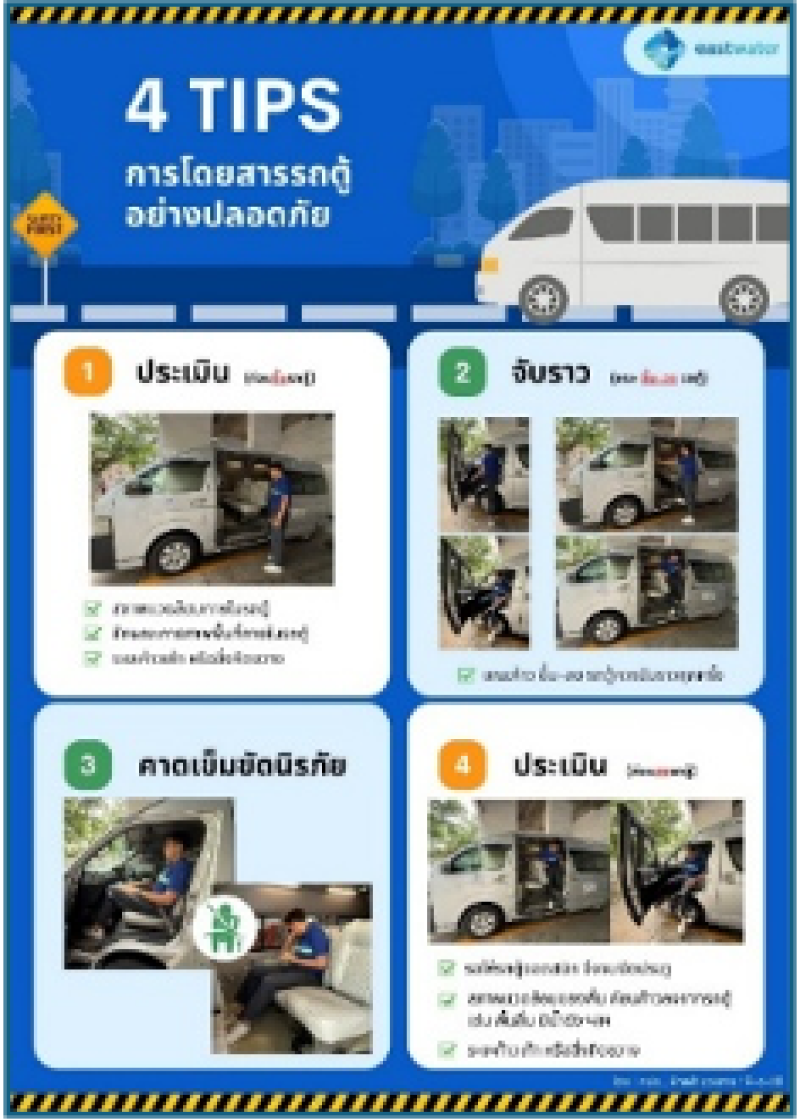
In 2025, there was 1 workplace accident, resulting in 1 employee injury. The incident occurred while the employee was performing duties by accompanying senior management on a site visit. The employee slipped while stepping down from a van and sustained an injury to the right arm but was able to continue working until the assignment was completed. After work, the employee sought medical attention (no lost-time injury). Following the accident investigation, employees were reminded to be aware of surrounding conditions and differences in vehicle characteristics, and to assess stepping distance when getting on and off vans, as each vehicle may vary. In addition, communication materials titled “4 Tips for Safe Van Travel” were developed and shared with employees.
Statistics of the Company’s Workplace Safety (employees, contractors, and outsourced workers) for 2025
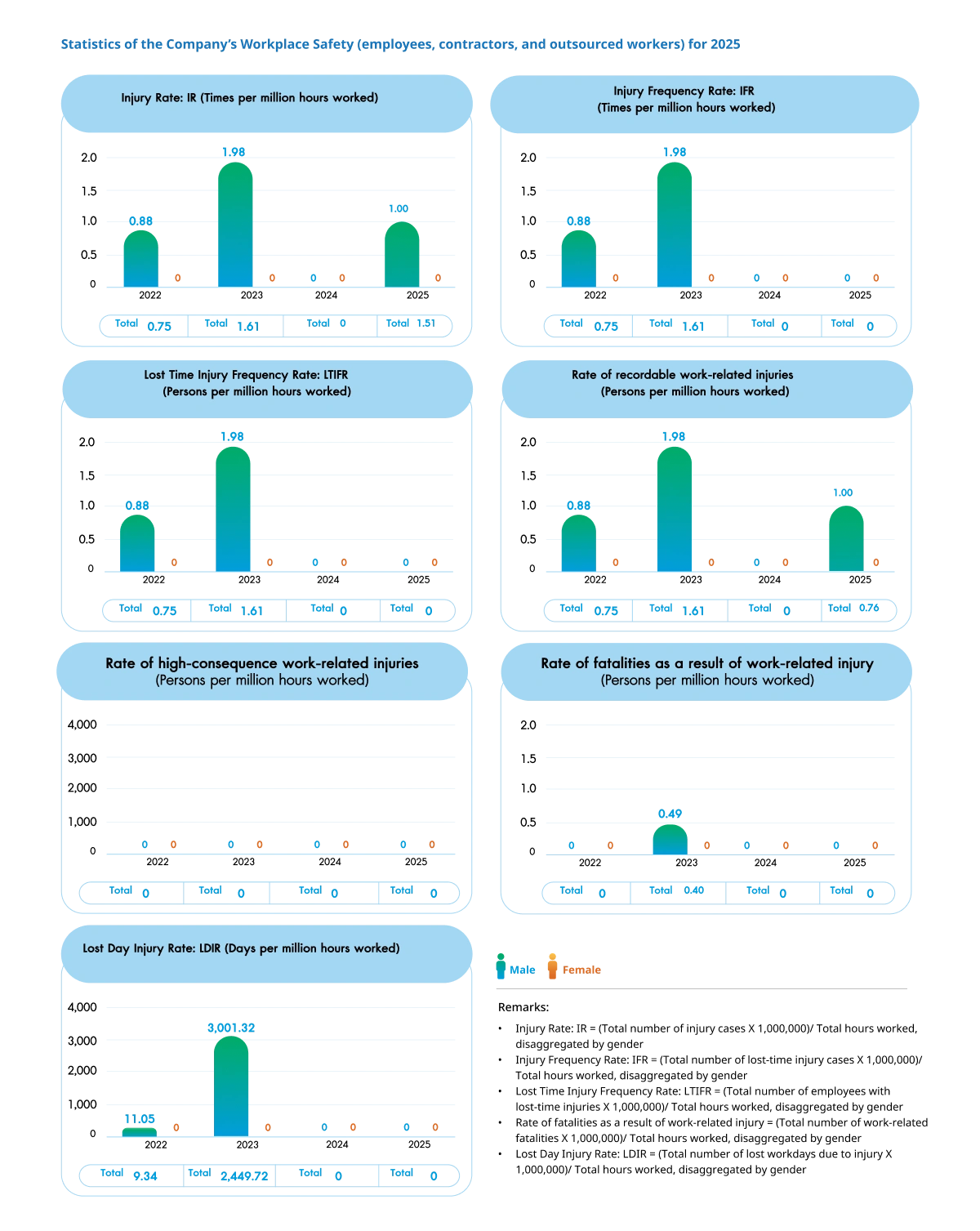
There were no accidents involving employees, contractors, and outsourced workers of UU PCL. during 2023–2025, resulting in a zero-injury rate for three consecutive years.
In 2025, the EW Group established three Safety, Occupational Health, and Working Environment Committees, namely the Head Office Committee, the Operating Area Committee, and the UU PCL. Committee, to ensure effective oversight across all areas. The Committees convene monthly and consist of the following members: (Disclosure 403-4:2018)
| No. | Area | Chairman | Members representing the employer at supervisory level | Members representing the employees | Workplace safety officer at professional level (serving as member and secretary) |
|---|---|---|---|---|---|
| 1 | Head Office | 1 | 2 | 3 | 1 |
| 2 | Operating Area | 1 | 7 | 8 | 1 |
| 3 | UU PCL. | 1 | 6 | 9 | 1 |

The roles and responsibilities of the three Committees cover the following:











Safety Activities
(Disclosure 403-3, 403-6, 403-7, 403-10:2018)
The Company undertook safety activities on a continuous basis as follows:
Results of the assessment to identify health hazards and assess health risks of employees, contractors, and outsourced workers can be summarized as follows:
1.1 Employees: Health hazards were identified, including lighting, noise, UV radiation, blue light, chemicals, computer-related working posture, psychosocial factors, biological factors (communicable diseases), heat, dust, and safety-related hazards. In addition, the Company arranged additional health check-up programs based on risk factors, such as hearing tests and vision tests. In 2025, no cases of occupational diseases were reported among employees.
1.2 Contractors and outsourced workers: The Company requires its contractors and outsourced workers to undergo annual health check-ups to monitor chronic diseases such as diabetes, hypertension, and abnormal blood lipids, which may lead to cardiovascular diseases, as well as to monitor work-related abnormalities such as vision impairment and noise-induced hearing loss. For work in hazardous areas, contractors and outsourced workers must have health check-up results in compliance with legal requirements and strictly adhere to them. In 2025, no cases of occupational diseases were reported among contractors and outsourced workers.
The Company publishes a monthly Safety, Health, and Environment journal (SHE NEWS) to disseminate information and promote awareness of safety, good health, and environmental responsibility among employees.
The EW Group established a training plan on safety, occupational health, and working environment for each target group of employees. In 2025, a total of 19 training courses were conducted (Disclosure 403-5: 2018).
The EW Group organized Safety Promotion Activities (Safety & Energy Day) to provide knowledge, raise awareness of safety, environmental protection, and energy conservation, and promote participation among employees and users of the East Water Building. The activities aimed to foster safety awareness, promote safe working practices, enhance occupational health, encourage well-being, and raise awareness of efficient and environmentally friendly energy use. The activities were categorized into four activities as follows:
4.1 Exhibition to disseminate knowledge on safety, occupational health, environment, and energy conservation
4.2 Safety & Health Talk on the topic “Safe Mind, Safe Life: The Neuroscience of Well-being – Building Mental Strength for Physical Safety”
4.3 “Energy Conservation Media Design Contest within the East Water Building”
4.4 Educational game booths on safety, occupational health, environment, and energy conservation
Through these activities, employees and building users enhanced their knowledge and understanding of safety, occupational health, environment, and energy conservation. The activities also encouraged executives and employees at all levels to recognize the importance of workplace safety, with a focus on reducing workplace accidents, while promoting better health, workplace happiness, and reduced work-related stress.
The activity aims to promote safety behaviors among employees, leading to the development and improvement of the organization’s safety culture. The activity was conducted with employees in the Company’s operating areas. In addition, employees’ APT’s were further developed into a quarterly quality APT’s program to serve as good practices and enhance awareness of hazard identification activities. Daily operations include regular inspection planning covering work procedures, machine conditions, chemicals, and the working environment, as well as employees. A follow-up system is in place to ensure timely corrective actions. This enables employees to recognize safety issues and identify unsafe behaviors, leading to preventive actions before accidents occur.
In 2025, targets and KPIs were established, requiring executives and all employees in the operation function to participate continuously. The assessment showed that 95.29% of employees in the operation function participated continuously and achieved the established targets.
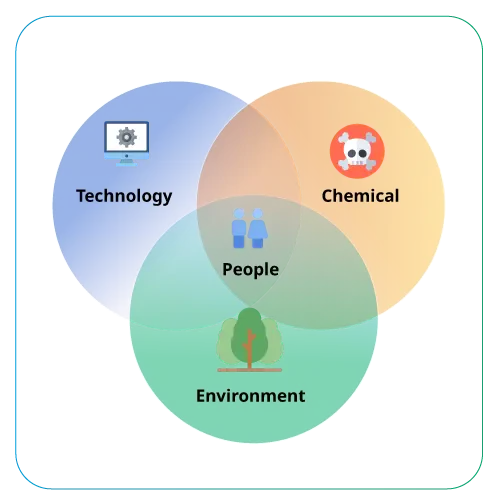
The Company has continued its Mental Health Promotion Activities for the third consecutive year, emphasizing mental health as a key factor in employee well-being at work. The activities aim to create a Happy Workplace environment, encouraging employees to maintain both physical and mental well-being, adapt to challenges, and perform effectively. Employees are supported in developing positive self-perception, emotional stability, and the ability to live and work in a changing environment. The Company also provides access to psychiatric or psychological counseling services.
7.1 Lighting Measurement: The Company conducted one lighting inspection covering the Head Office, Chachoengsao, Chonburi, and Rayong areas. All areas were found to meet the legal standard requirements.
7.2 Working Equipment: The Company conducts daily inspections of equipment, including motors, pumps, accessory pumps, valve systems, electrical systems, fire alarm systems, control SCADA/instruments, flowmeters, and online water quality monitoring equipment. All equipment was found to be in normal condition and ready for use.
7.3 Fire Protection Equipment: The Company has provided fire protection equipment, including portable fire extinguishers
- FM_Por_400-017 RV.00 Hand-held fire extinguisher inspection form
- FM_Por_400-018 RV.00 Portable gas detector inspection form
- FM_Por_400-020 RV.00 Emergency light and fire exit sign inspection form
- FM_Por_400-031 RV.00 Manual fire alarm inspection form
- FM_Por_400-032 RV.00 Automatic fire extinguishing system inspection form
7.4 Personal Protective Equipment: The Company provides standard-compliant personal protective equipment (PPE) to employees. Prior to use, employees are required to study proper usage and maintenance. Equipment includes safety shoes, safety helmets, hearing protection, safety glasses, and leather gloves.
Emergency Management
The Company places great importance on emergency management to ensure preparedness and mitigate potential impacts on employees and the Company’s assets. In 2025, the Company undertook the following actions:
-
The Company revised the Business Continuity Management (BCM) Manual and updated the Business Continuity Plan (BCP) and conducted a business continuity drill at the Head Office, East Water Building, by simulating an earthquake scenario. In the operating areas, scenarios involving rupture and leakage of raw water reservoirs causing flooding in roads, agricultural areas, and nearby communities were simulated.
The Company tested the completeness of the BCP, as well as the knowledge and understanding of roles and responsibilities of relevant units. It also ensured the readiness of information systems, operational systems, alternate workplaces, and communication among employees working from home, internal units, and external agencies.
In addition, the Company prepared the Crisis Management Plan (CMP) to enhance preparedness for managing unexpected or temporary situations and to respond to potential future incidents, thereby minimizing impacts on the Company and its stakeholders. The Crisis Communication Plan was also established to ensure effective and timely communication.
-
The Company’s annual firefighting and evacuation drills were conducted in two areas as follows:
- Head Office, East Water Building: drills were conducted in two sessions, i.e., nighttime and during business hours
- Operating areas: drills were conducted at stations and offices covering Rayong, Chonburi, and Chachoengsao provinces
These drills were conducted to prepare for evacuation procedures and to test fire protection systems in case of emergencies. Government agencies, fire stations, police stations, hospitals, training institutions, and nearby buildings participated in and supported the drills, and the objectives were successfully achieved.
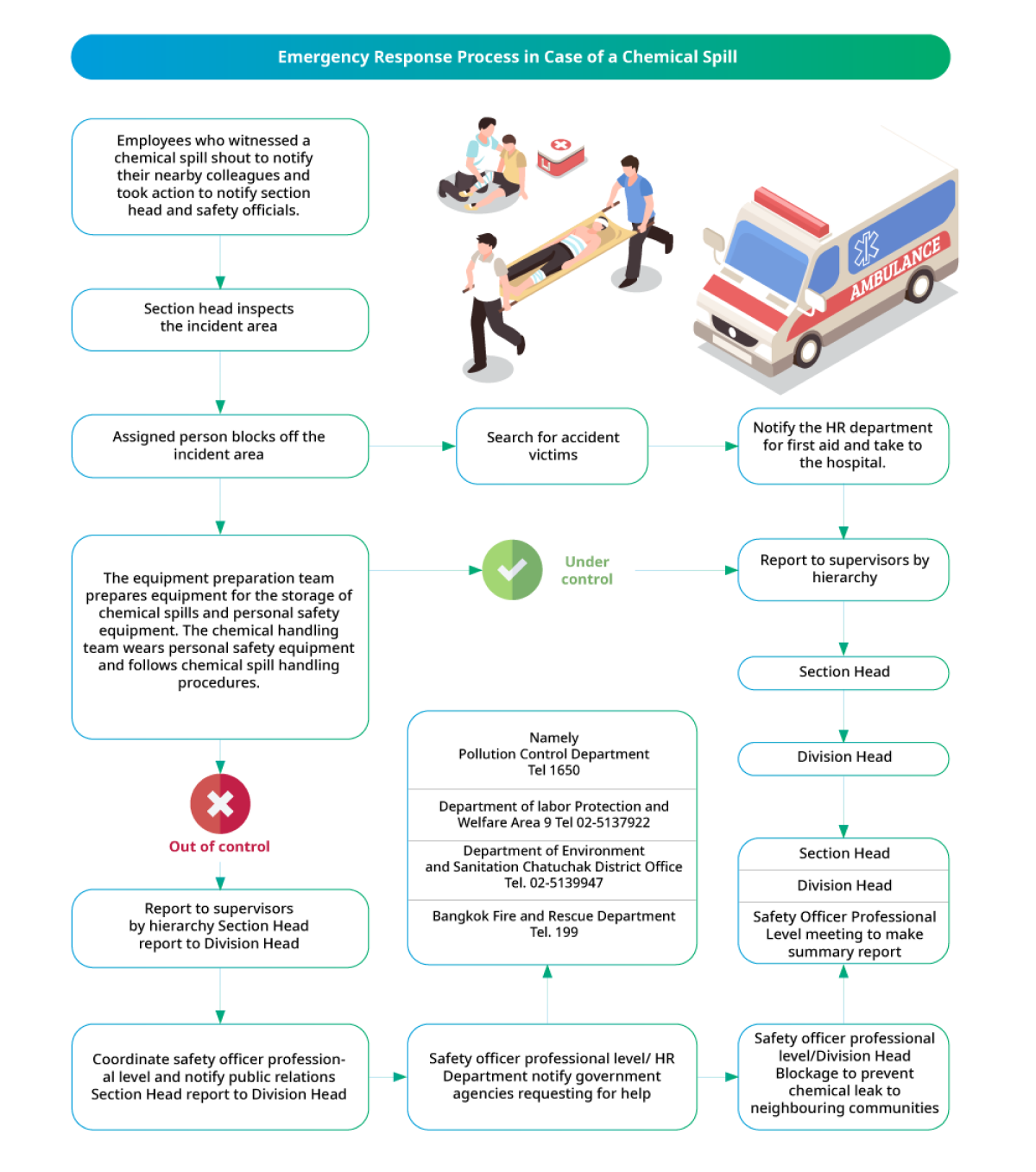
- The Company conducted annual chemical spill emergency response drills to prepare for handling hazardous chemical or fuel spills, including the management of resulting waste, in accordance with the Ministerial Regulations.