Good Corporate Governance Principles
(Disclosure 205-2)
The Board of Directors has established a Good Corporate Governance policy in accordance with the Office of the Securities and Exchange Commission (SEC)’s 2017 Corporate Governance Code for Listed Companies. The Company has also adopted an anti-corruption policy within the organization. The Corporate Governance and Sustainable Development Committee is assigned to review and screen the relevant policies and practices before submitting them to the Board of Directors for consideration and approval.
The Company reviews such policies and practices annually to ensure alignment with applicable laws, regulations, international practices, and corruption risks that may change over time.
The Company communicates the principles of good corporate governance, the group-wide Code of Conduct, and the anti-corruption policy to the Board of Directors, executives, and employees at all levels to acknowledge and adhere to as guidelines for their operations. These are also disclosed on the Company’s website (www.eastwater.com) and the Internal Web.

Promotion of Good Corporate Governance and Anti-Corruption
(Disclosure 2-17)
The Company continuously promotes knowledge and understanding of anti-corruption among employees through training, internal communications, and related activities to raise awareness and cultivate an organizational culture that upholds transparency and integrity. The policy covers the operations of the Group and serves as a guideline for conducting business with suppliers and relevant stakeholders.
In 2025, the Company organized activities to promote good corporate governance and anti-corruption as follows:
- The Company organized orientation for new employees on the Company’s policies and regulations. The content covered the group-wide good corporate governance principles, the group-wide Code of Conduct, the internal anti-corruption policy, prevention of conflicts of interest, the use of inside information, and the Data Governance Policy guidelines.
- Directors, executives, and employees attended training programs organized by the Thai Institute of Directors (IOD) and the Thai Listed Companies Association as follows:
- Director Certificate Program (DCP)
- Director Accreditation Program (DAP)
- Advanced Audit Committee Program (AACP)
- Role of the Chairman Program (RCP)
- Company Secretary Professional Development Program
- Business and Human Rights Program
- Directors attended a seminar titled “ESG Risks Mitigation: What Directors Need to Know Before Risks Become Organizational Turning Points.”
- The Company organized a panel discussion for employees, suppliers, and building tenants under the topic “ESG Risk Talk: Perspectives on Business, Environment, and a Sustainable Future.
- The Company produced public relations materials on various topics, such as “What is ESG Risk?”, the COSO-ERM 2017 risk management framework, the integration of ESG issues into enterprise risk management, the development of the Thai capital market and corruption issues, and the impacts of corruption on national development.
- Employees of the Group were invited to participate in Anti-Corruption Day, organized by the Anti-Corruption Organization of Thailand.
- The Company prepared a test to assess the level of knowledge and understanding among Group employees on anti-corruption, prevention of conflicts of interest, the use of inside information, and Data Governance Policy guidelines. All Group employees completed the test (100%), with a passing rate of 80.00%.
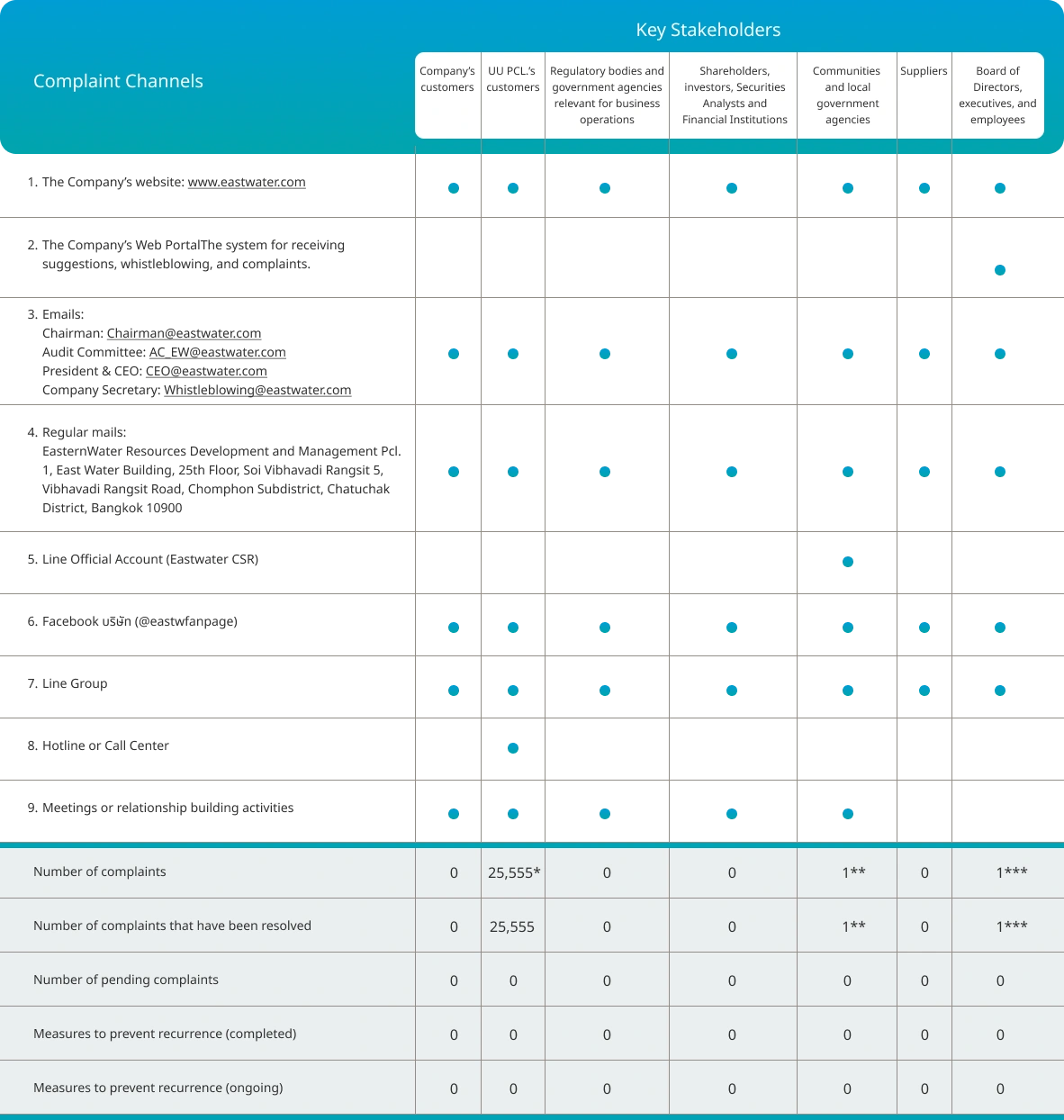
In 2025, the Company received two complaints through the whistleblowing channels. The Company completed the complaint-handling process and found that the matters raised did not constitute misconduct as alleged, and no violations of the Code of Conduct were identified. (Disclosure 205-3)
The Company has preventive procedures in place to prevent further breach of the Group’s Code of Conduct as follows:
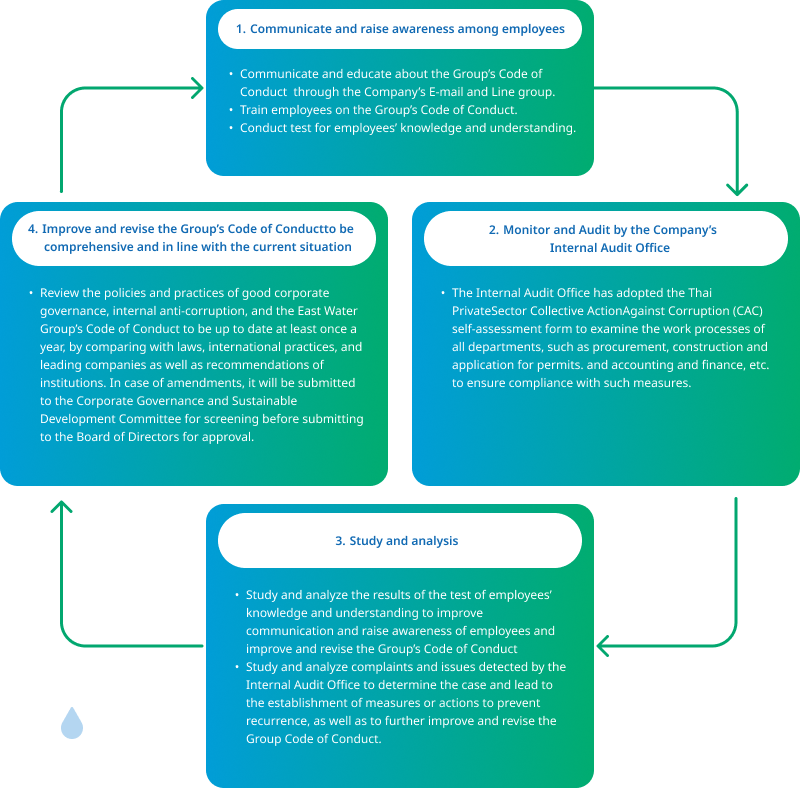

Complaint Management
(Disclosure 2-16, 2-25, 2-26)
The Company places importance on listening to opinions and complaints from all stakeholder groups throughout the Company’s value chain in order to ensure that business operations are conducted responsibly, transparently, and in accordance with good corporate governance principles. The Company has therefore established systematic mechanisms for receiving and handling complaints, assigning responsible units to manage complaints and follow up on their resolution through the Company’s various channels. The complaint management process covers issues relating to ethics, product and service quality, as well as human rights. The Company conducts the process with fairness and transparency, while also taking into account the protection of complainants’ information and safety.
In addition, the Company analyzes information and issues arising from complaints to support the continuous review and improvement of its operational processes. This helps reduce risks from business operations, strengthen stakeholders’ confidence, and support the Company’s long-term sustainable development.
Complaint Channels
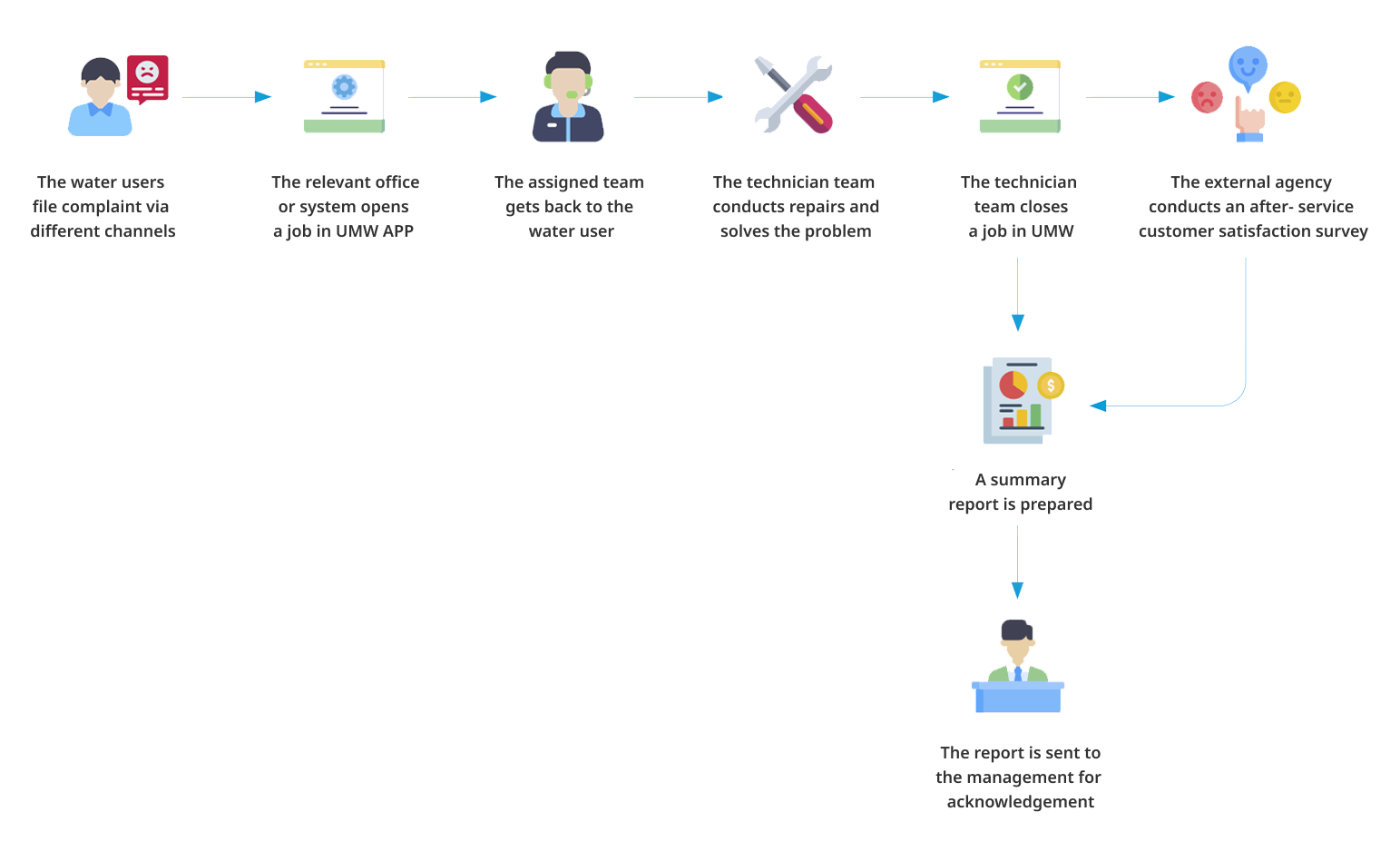
Complaint Handling Process (Services)
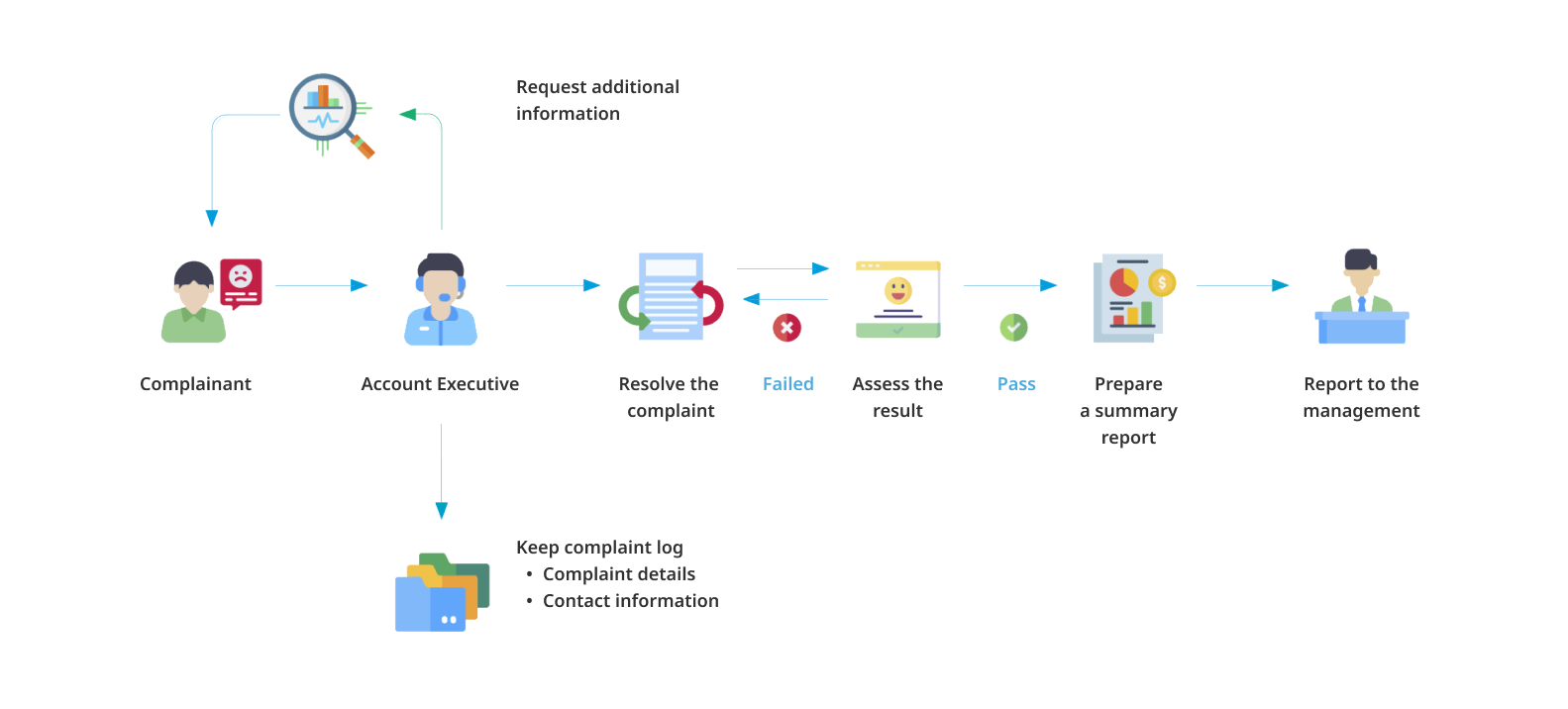
UU PCL.’s Customers (Tap Water)
Complaint Handling Process (Human Rights)
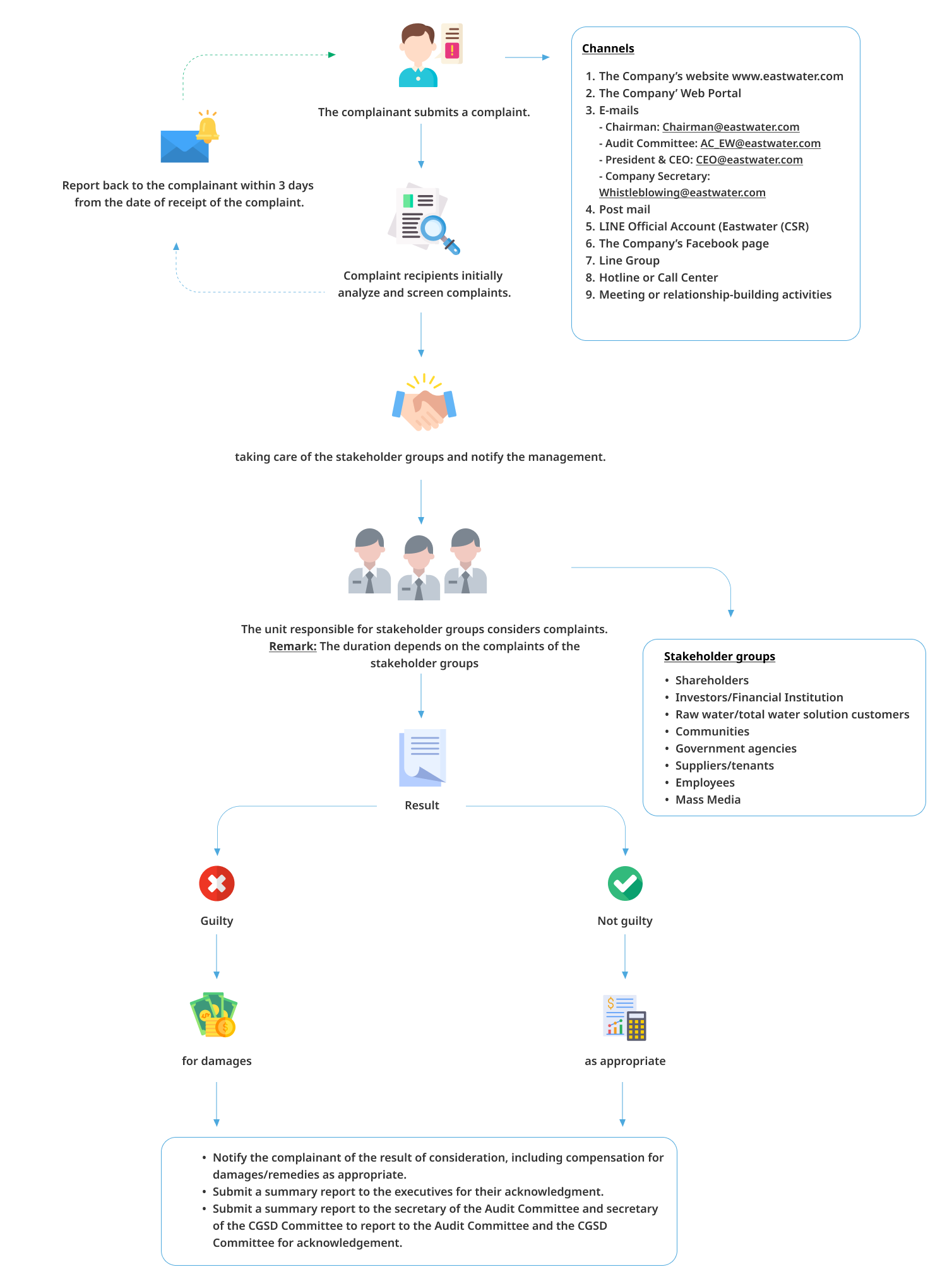
Remark Human rights complaints such as complaints about labor rights, community rights, suppliers' rights, shareholders' rights, investors' rights, financial institutions' rights, customers' rights, mass media’s rights, complaints about natural resources and the environment, etc.